Affiliate disclosure: This guide contains retailer links. If XOOC later activates an eligible affiliate relationship and you buy through one of those links, we may earn a commission at no extra cost to you. No current price is assumed.
The real job
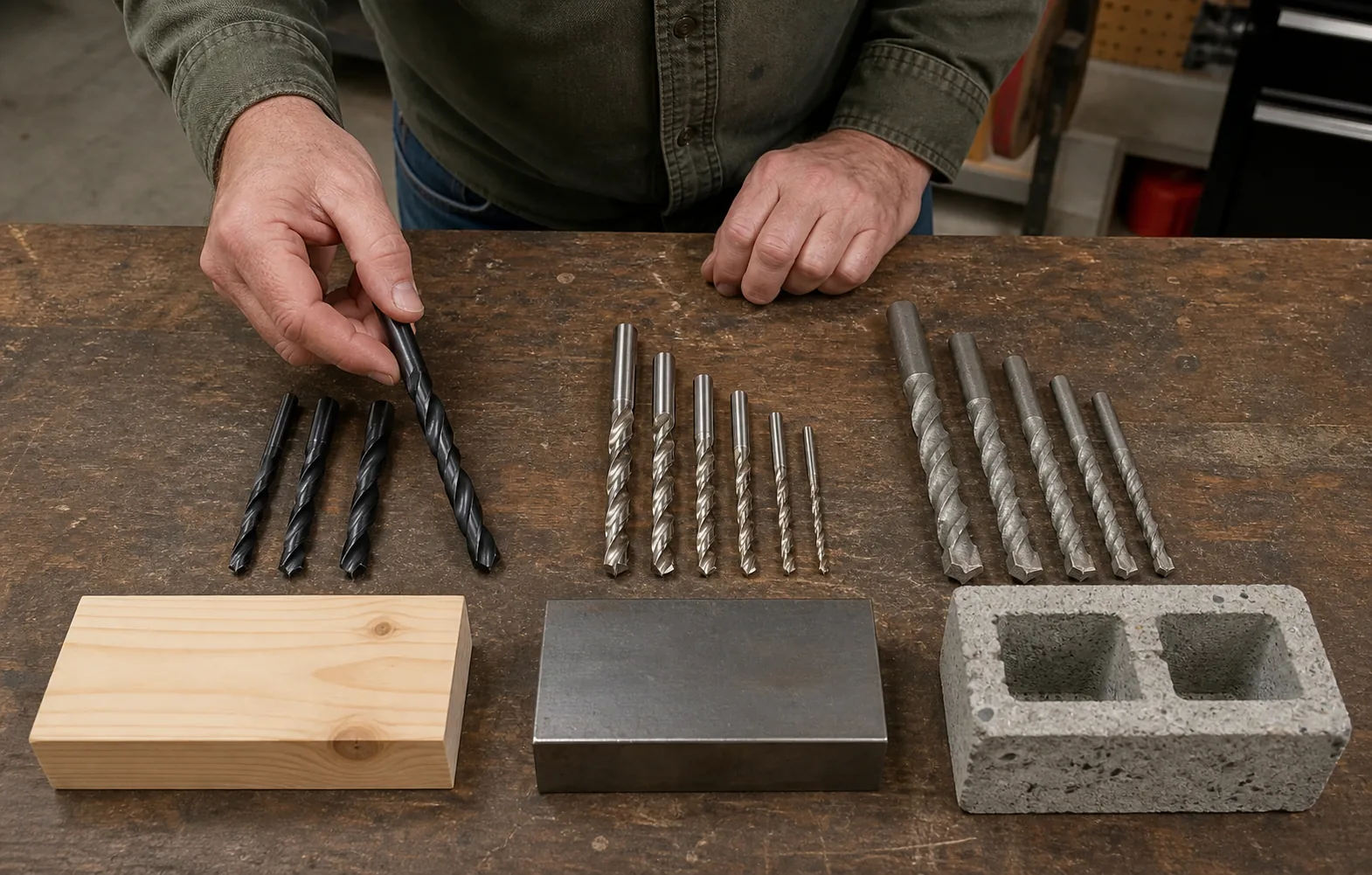
A curtain bracket goes into wood framing, a garage organizer meets a concrete wall, and a metal cabinet needs one clean hole. The drill may be the same, but bit geometry, speed, pressure, and debris handling should change with the material.
That situation is our filter for the rest of the guide. Features only matter when they improve control, fit the available space, shorten a repeated task, or support a safer and more reliable routine.
Buying priorities
Material match
Bits cut differently in wood fibers, metal, masonry, tile, and hollow wall surfaces.
Hole purpose
Pilot holes, clearance holes, anchors, and finish openings call for different diameters and edge quality.
Speed and cooling
Follow bit and tool guidance; excessive speed or pressure can overheat edges and damage the work.
Use these priorities in order. If an option misses the first requirement, a promotional bundle or higher specification elsewhere should not rescue it.
Three sensible ways to buy
New homeowners tackling common wall and furniture tasks.
- Look for
- Clearly separated material types and useful small sizes.
- Tradeoff
- Often includes pieces that duplicate one another.
Workshop users who value cleaner holes and replacements.
- Look for
- Readable size marking and storage that keeps edges protected.
- Tradeoff
- Multiple cases to organize.
Concrete, brick, and block projects with a suitable drill.
- Look for
- Bits matched to the anchor manufacturer and tool mode.
- Tradeoff
- Does not cover tile or every masonry condition.
Retailer pages open in a new tab. Confirm the exact model, included equipment, compatibility, availability, current price, delivery, and return terms before purchasing.
Pre-purchase checklist
- Write down the largest and smallest job you expect this drill bit set wood metal masonry homeowner to handle.
- Confirm dimensions, weight, power source, and included accessories on the current listing.
- Check that controls are reachable and the tool can be stored safely in your available space.
- Read the manufacturer instructions before first use and keep guards or safety features in place.
- Compare return terms and replacement-part availability before ordering.
Mistakes and field notes
Avoid these mistakes
- Buying for a rare maximum-capacity task when a rental would be more sensible.
- Comparing bare-tool prices with complete kits as if they include the same equipment.
- Ignoring weight, vibration, storage, dust, noise, or setup time.
- Assuming accessories are universal without checking the fit standard.
Use it well
- Practice on scrap material before working on a finished surface.
- Stage the work area so the cord, battery, fasteners, and offcuts stay out of the working path.
- Stop when control or visibility drops; changing the setup is usually faster than repairing a mistake.
- Clean the tool and inspect consumables before putting it away.
Manufacturer instructions, local rules, the condition of the work area, and your own experience take priority over a general buying guide. Stop and seek qualified help whenever the project moves beyond your training or a safe setup cannot be maintained.
Frequently asked questions
What should I decide before comparing models?
Start with the job, the material, the space available, and how often the tool will be used. Those constraints matter more than a long feature list.
Is the most powerful option automatically the best value?
No. Extra capacity usually adds weight, size, cost, or maintenance. Buy enough capability for the hardest job you can reasonably expect, then prioritize control and convenience.
How should I compare current prices?
Compare the complete kit, included accessories, warranty terms, return policy, and any batteries you already own. XOOC does not publish a fixed price without a reliable update process.
Sources and update note
Last checked: 2026-08-09. These sources support general safety context; product specifications must be rechecked on the current manufacturer or retailer page.