Affiliate disclosure: This guide contains retailer links. If XOOC later activates an eligible affiliate relationship and you buy through one of those links, we may earn a commission at no extra cost to you. No current price is assumed.
The real job
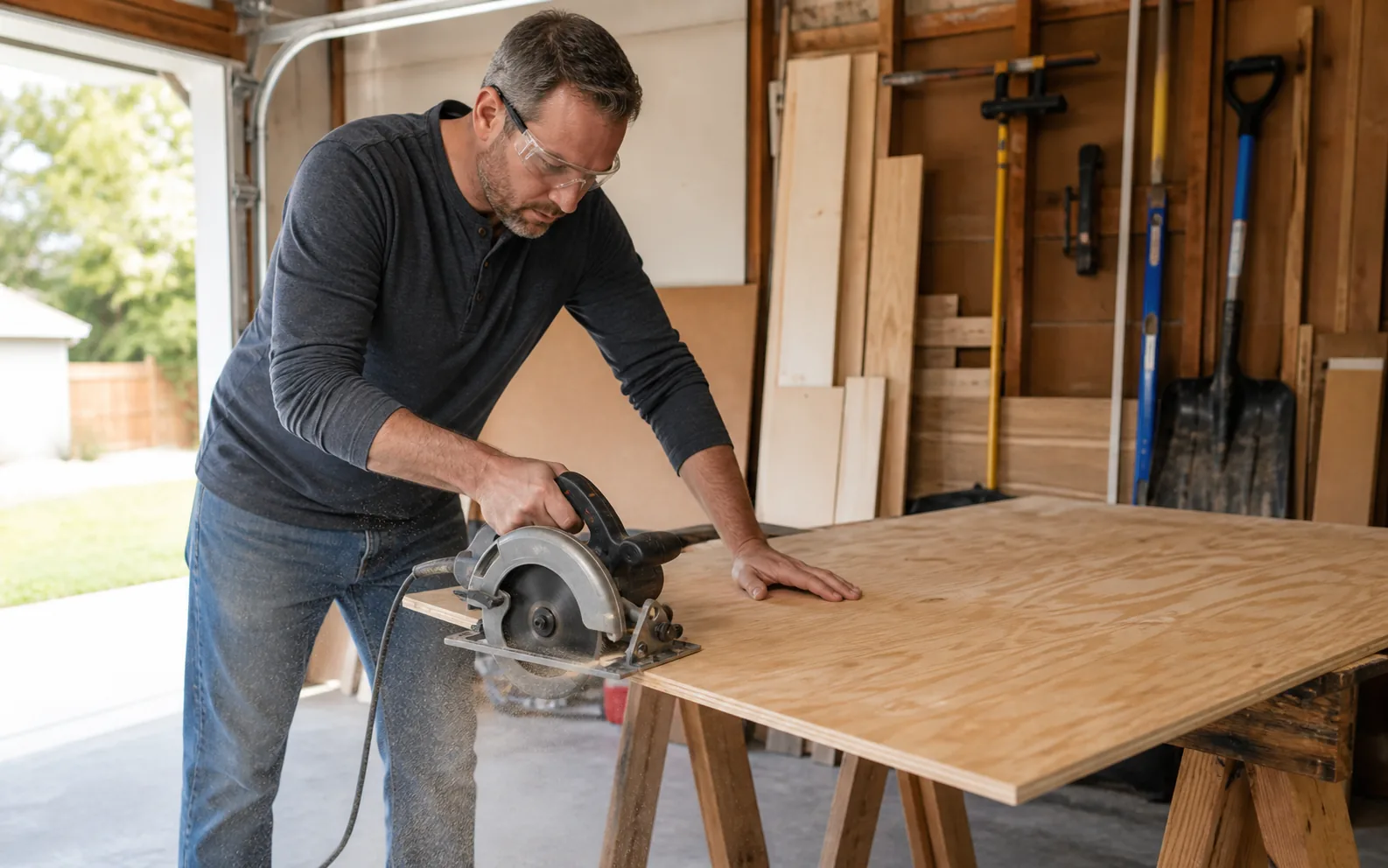
A Saturday garage project begins with breaking down one sheet of plywood, trimming a few two-by-fours, and making a clean shelf edge that will stay visible. The saw must be easy to guide on a temporary work surface and simple to store when the car returns to the garage.
That situation is our filter for the rest of the guide. Features only matter when they improve control, fit the available space, shorten a repeated task, or support a safer and more reliable routine.
Buying priorities
Cutting setup
A straight guide and proper material support influence accuracy more than a premium motor on an unstable work surface.
Blade depth
Confirm the saw can cut the thickest material at the bevel angle you actually use.
Dust direction
Look at where chips exit and whether a vacuum adapter works with your cleanup routine.
Use these priorities in order. If an option misses the first requirement, a promotional bundle or higher specification elsewhere should not rescue it.
Three sensible ways to buy
Shelving, flooring, and quick cuts where portability is valuable.
- Look for
- Good balance, a visible cut line, and batteries shared with existing tools.
- Tradeoff
- Reduced runtime and depth compared with full-size options.
Frequent framing and sheet-goods work away from outlets.
- Look for
- A rigid shoe, electronic brake, and enough battery capacity for the day.
- Tradeoff
- Battery weight and higher system cost.
Garage-based projects and buyers who want dependable power for less.
- Look for
- A flexible cord, smooth depth adjustment, and a comfortable front handle.
- Tradeoff
- Cord management is part of every cut.
Retailer pages open in a new tab. Confirm the exact model, included equipment, compatibility, availability, current price, delivery, and return terms before purchasing.
Pre-purchase checklist
- Write down the largest and smallest job you expect this circular saw for DIY projects to handle.
- Confirm dimensions, weight, power source, and included accessories on the current listing.
- Check that controls are reachable and the tool can be stored safely in your available space.
- Read the manufacturer instructions before first use and keep guards or safety features in place.
- Compare return terms and replacement-part availability before ordering.
Mistakes and field notes
Avoid these mistakes
- Buying for a rare maximum-capacity task when a rental would be more sensible.
- Comparing bare-tool prices with complete kits as if they include the same equipment.
- Ignoring weight, vibration, storage, dust, noise, or setup time.
- Assuming accessories are universal without checking the fit standard.
Use it well
- Practice on scrap material before working on a finished surface.
- Stage the work area so the cord, battery, fasteners, and offcuts stay out of the working path.
- Stop when control or visibility drops; changing the setup is usually faster than repairing a mistake.
- Clean the tool and inspect consumables before putting it away.
Manufacturer instructions, local rules, the condition of the work area, and your own experience take priority over a general buying guide. Stop and seek qualified help whenever the project moves beyond your training or a safe setup cannot be maintained.
Frequently asked questions
What should I decide before comparing models?
Start with the job, the material, the space available, and how often the tool will be used. Those constraints matter more than a long feature list.
Is the most powerful option automatically the best value?
No. Extra capacity usually adds weight, size, cost, or maintenance. Buy enough capability for the hardest job you can reasonably expect, then prioritize control and convenience.
How should I compare current prices?
Compare the complete kit, included accessories, warranty terms, return policy, and any batteries you already own. XOOC does not publish a fixed price without a reliable update process.
Sources and update note
Last checked: 2026-08-09. These sources support general safety context; product specifications must be rechecked on the current manufacturer or retailer page.